Helpful Landscaping Ideas

Landscaping Ideas 2

In architectural terms, landscaping means the art of modifying land areas through the use of natural, cultivated, or constructed elements in an organized manner and with accordance to a comprehensive yet aesthetic planning. If you are getting interested with this art, it is best to come up with fresh landscaping ideas to set your self apart from the rest.

Indeed, landscape design is one of those terms that can be quite overwhelming especially for neophytes. But, this doesn’t have to sound so intimidating because the underlying principles in it can be translated in simple terms or layman’s terms, so to speak. Once translated into less complicated terms, landscaping would be easily understood and more people can do it on their own.

Aiding the ideas of creation

If you new into landscaping, you need to landscaping ideas to help you create you own one. But, before going gaga over numerous landscaping ideas out there, you need to familiarize yourself first with the basics of the art. These include knowing the basic elements of landscape design such use of colors and its combination as well as the various color theories. The standards of forms, lines, scales, and textures should also be pondered upon.

To help you come up with your own landscaping project, here are some helpful landscaping ideas that you can use in order to enhance the beauty of your home or make your own personal space pleasing to the eye.

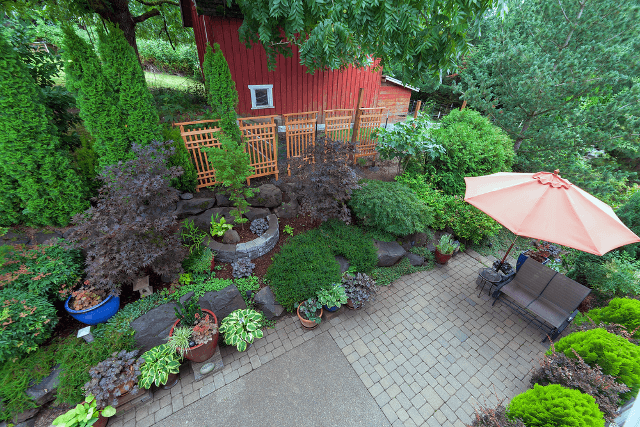
1. Always assimilate the hardscape into the initial and final landscape design. “Hardscape” refers to elements and features including fences and other decorations used in the garden as well as patios and decks because these will give a wonderful transition coming from your indoors to the outdoors of your garden. Always make sure that the elements used in hardscape will complement other elements such as plants.

2. Try building a dependable but fashionable set of fences. People might not notice it but fences—if placed and designed properly—can create a huge difference in the overall look of the house. When doing your own landscape, make sure that you invest on great-looking fence because it will be standard in the garden. To be more creative, try to use plants as a fence aside from using the traditional wood ones. Here, you have a unique and reliable fence that will speak of your distinct taste and preference. But, if you plan to use plants as fence, make sure that they are composed of shrubs so they will be easier to manage.

3. Consider using foliages and drought-tolerant plants to use. If you are not sure if you can take care of the plants in your garden regularly, make sure that you use plants that don’t need constant watering and taming.

4. Combine colors of plant foliages and flowers. To create an eye-catching landscaping, always think of the characteristics of the foliage. Make sure that the foliage of plants has various textures and colors to create easy patterns that are pleasing to eye.

5. Be experimental in choosing materials. One of the most refreshing landscaping ideas out there is the use of substitutes in place of the traditional ones. This is because in enables the designer to explore more possibilities and lets him or her to be more creative.

One good example is the use of wood chippers especially for those who constantly redesign their space. These are a good option especially for people who want to trim their growing plants often.

Steps to Go Through Before Residential Landscaping

Steps to Go Through Before Residential Landscaping

Whatever the project may be, if it is a big time one or a simple residential landscaping, design is the most important factor that one must consider to be able to lay out a plan and eventually act upon.

Residential Landscaping
In whatever we decide to do in life, there are things to ponder about before coming up with a plan. The same thing is true if you’d like a lawn makeover, there are factors to go through and ideas to think about before actually starting the process.

Why Do You Want to Do It?
If the idea is to give your yard some kind of a renovation through landscaping, then the possibilities as to what you’d like the outcome to be are endless. You call the shots according to what you like at the moment that you want it to be done.

But on the other hand, you have to give the landscaping design a more posh look if you decide to sell the property. This is also a way to be safe, not every potential buyer would want an unfamiliar style, but with being simple and classy, one could never go wrong. It would also be to your advantage because it will add more value to what you’re selling and more people will be enticed to look at it and consider a deal.

What Do You Want to Be Done?
For people who’d like to do their own landscaping, the American Nursery and Landscape Association or ANLA says that it is important for the property’s salability if you choose to maintain large, old trees in it. Those mature trees are said to be of great impact to those who are looking into the land.

In designing for your own landscape, remember the basic elements which are color, form, line, scale and texture.

Look at the project through an artist’s eye. Choose plants that look good when placed together or side by side in terms of their colors. Imagine what other people, especially the would-be buyer of the property would feel upon seeing the colors that you chose for the project.

Form is looking at the plants to be placed in the project in terms of the shape and branching patterns. Such factors should blend in with what one has planned for the whole landscape.

Line is the according to the arrangement of the materials to be used in the design, how you plot them accordingly as well as looking into their borders.

Scale or the size of the plants that you want to use in the landscape design also determines the texture. The placing of each plant depending on its sizes would give one an idea about the texture because this factor is a visual matter.

Who Do You Like to Do It?
You could seek out professional help if you think that you cannot do it yourself. But with vast resources on landscape design, you might want to try browsing through first and challenge yourself if you can do it before shelling out your penny for someone else’s services.

First, you need to observe other people’s backyards. You might also want to ask how they have done it. Or if you see someone else doing such, all you have to do is watch the process and get inspiration from it.

You can also find a wealth of information from landscaping books and magazines, television and, of course, the Web.

Are You Up with the Plan?
Upon having the plan ready for your residential landscaping, you just have to ask yourself if you’re up for it. Consider everything, the budget, the materials, your purpose on doing such and the property itself, before plunging in and starting out the process.

Tips for Keeping Costs Down When Landscaping

Tips for Keeping Costs Down When Landscaping

Tips for Keeping Costs Down When Landscaping
Landscaping can be an expensive proposition. However, it is possible to keep the costs to yourself relatively low by paying attention to a few practices that can save you money. After all, the most beautiful landscape in the world can be a source of vexation if it costs you more than you can afford to put in and upkeep. By remembering a few helpful tips, you can save money on your landscaping needs, and enjoy it all the more.
Plan before you make your purchases. Having a plan for your landscape will allow you to practice common sense and economy when making purchases. If you do not plan, you may buy something you do not need, and that can be a waste of money. Complete a rough sketch of what you would like to accomplish with your landscape design. Also find out exactly what you need to make it possible. There is a wealth of Web site that can help you get an idea of what you need to complete a project, and specialty stores and even some home improvement warehouses have experts on hand who can give you advice. Once you know exactly what you need, you can make your purchases without buying excess materials that result in money wasted.
Make your purchases in phases. If you make out a plan, you should also include when you will perform certain portions. Most people cannot afford to make all the changes that they would like to make at once. If you plan out phases of your landscape project, then you can buy what you need as you go along, and as you have the money. This can help you save on the interest and loan fees associated with home improvement loans or using credit cards to make purchases.
Cheaper is not always better. If there is little difference in quality, then buying the cheaper item is the best course. However, local shops often have true experts who will impart of the wisdom for free if you ask questions while making a purchase. Specialty shops can give you correct information on installing a water feature. If you are new to landscaping, it can save money in the long run to spend a little extra to get better service, help and advice. If you do buy at a “big box” store, be sure to carefully inspect plants for diseases and insect problems. These stores may not care if they take as good of care of the plants as a nursery would. Buying a diseased plant only means buying it over again when it dies, and this means that you are out some amount of money. Many nurseries offer warranties and guarantees free of charge on their plants.
Use common sense timing on your landscape purchases. If you plan to do some landscaping, think about when you would like to accomplish it. Buy lumber during the winter, when it is cheaper, and then store it until you are ready to use it. Buy things like trees, perennials, mulch, and soil late in the season. In most places, you still have time to winterize your landscape if you wait until October to make your maintenance purchases. Also, watch for plant sales at local nurseries. This is often a great way to get quality plants at low prices.
Use alternative resources. It is not always necessary to buy something at a store. You can order through catalogs or online. An inexpensive membership to a garden and seed club can yield very good prices on many items, as well as helpful advice. Also, you may be able to arrange a plant exchange in your neighborhood. Many cities offer low price or free mulch and compost, and you can get stones and bricks at many construction or demolition sites.
Share costs with neighbors. If your neighbors and you pool resources, you can often get a good deal on items bought in bulk. Likewise, share the rental fees for machinery such as chippers, tillers, and aerators. If everyone chips in a few dollars, you can work out a schedule where each neighbor gets to use the equipment before it is taken back. This is a great way to reduce the costs associated with landscaping.

Best Landscaping Practices

Best Landscaping Practices

In order to make a great landscape, there are certain
tried-and-tested practices that you can follow. Not only do
these practices help you create a beautiful landscape, they
also ensure that you do not waste any money and that you
are not harming the environment in any way.

Here are some of the best landscaping practices that you
can do in your own home garden.

1. Design your landscape in a way where water is retained
well. This doesn’t only go for water that comes from your
sprinklers but also storm runoffs.

By having this kind of set-up, you do not spend a lot on
watering your plants and you also help keep your
community’s water supply at bay.

2. Use fertilizers responsibly. Some people become
trigger-happy when it comes to using fertilizers on their
landscapes.

While putting in too much fertilizer can be detrimental to
the environment, using organic fertilizers or choosing
plants that are well-accustomed to the local environment
will help in curbing the problem.

3. Take it easy on pesticides and weed killers – just like
fertilizers, pesticides and weed killers can do more harm
than good if used irresponsibly.

4. Schedule watering of the plants. Watering the plants
early in the morning help in retaining the water much
longer than doing it at noon for example.

While considering the time for watering the plants may seem
like a small thing, it translates to something big when the
water supply is put into the equation.

Organic Landscaping Techniques

Organic Landscaping Techniques 1

Many people are becoming more interested in using landscape tactics that do not harm the earth. In addition to being great for the environment, organic landscaping can also provide benefits for your wallet and for your health. One of the most alarming things to many people is the fact that some pesticides and fertilizers can harm their children. When you have children or grandchildren, it seems kind of a waste if they cannot play on the lawn because there is fertilizer all over it. Likewise, the improper use of pesticides, or sometimes even the proper use of these chemicals, can result in sickness. Another benefit of organic gardening can also be felt in the wallet. If you make use of the resources that you have at hand, you can actually save money with do-it-yourself organic landscaping, rather than paying money for chemicals to unnaturally enhance your plants.

One of the best ways to practice organic landscape is to make use of native plants. It is much easier to naturally promote the health of your landscape when the plants you use thrive in your area. Bringing in exotic plants or non-native plants from areas with very different conditions only results in frustration and the possible reliance on chemicals to help you take care of them. If you want to keep a landscape that works with the natural setting, native plants, or plants from areas with similar conditions, can help you accomplish this.

The lawn is most often the most visible part of a landscape. It seems as though many people thing it is necessary to use a great deal of chemicals to keep pests from ruining the lawn or to help the lawn grow well. The truth, however, is that by actively caring for the soil in your lawn as well as the grass, you can create a healthier lawn. This can be done in a number of ways that do not involve chemicals that can be harmful to the environment and to your health.

One of these ways is the use of organic fertilizer. There are compositions of fertilizer made entirely of organic materials. These fertilizers do cost more up front, but as they are used regularly reduce long run costs. The decrease the need for chemicals that can become expensive (and if applied wrong can actually damage you lawn more than help it), and they do not need to be applied as often. So, the cost often evens out eventually, as you have to apply the synthetic fertilizer much more often.

Another way to take care of the lawn is to use practices that promote healthy soil and better grass roots. One of these practices is aeration. Aeration relieves soil compaction by punching holes in the ground. This helps by making the soil easier to go through. This means that the roots have more room to go deeper, and organisms, like earthworms, that actually help the health of your grass, have more room to move about and make their homes. This results in naturally healthy grass that withstands pests better and keeps weeds out on its own.

Top dressing and over seeding are other organic practices that improve the health of the lawn. Top dressing is the act of taking composted organic matter and mixing it half and half with sand. A thin layer is then spread over the lawn. This actually improves the lawn rooting, creating healthier, hardier grass, without fertilizer. Over seeding is a method that makes use of more than the recommended amount of grass seed — about one and a half times more than the recommended amount. Over seeding promotes quicker germination and results in a thicker lawn that fights weeds.

Fertilizer, organic or otherwise, is not even necessary if you practice common sense in using organic gardening techniques. You can even create your own compost and mulch by using grass clippings from the lawn mower and leftovers from the garden. Raked leaves and pine needles and weeds can also be used. By leaving them to decompose, you are creating nutrient-rich organic matter than can be used to, in turn, improve the health of all the plants in your landscape, not just grass. Organic gardening can be a very rewarding and money saving effort when you do it yourself.